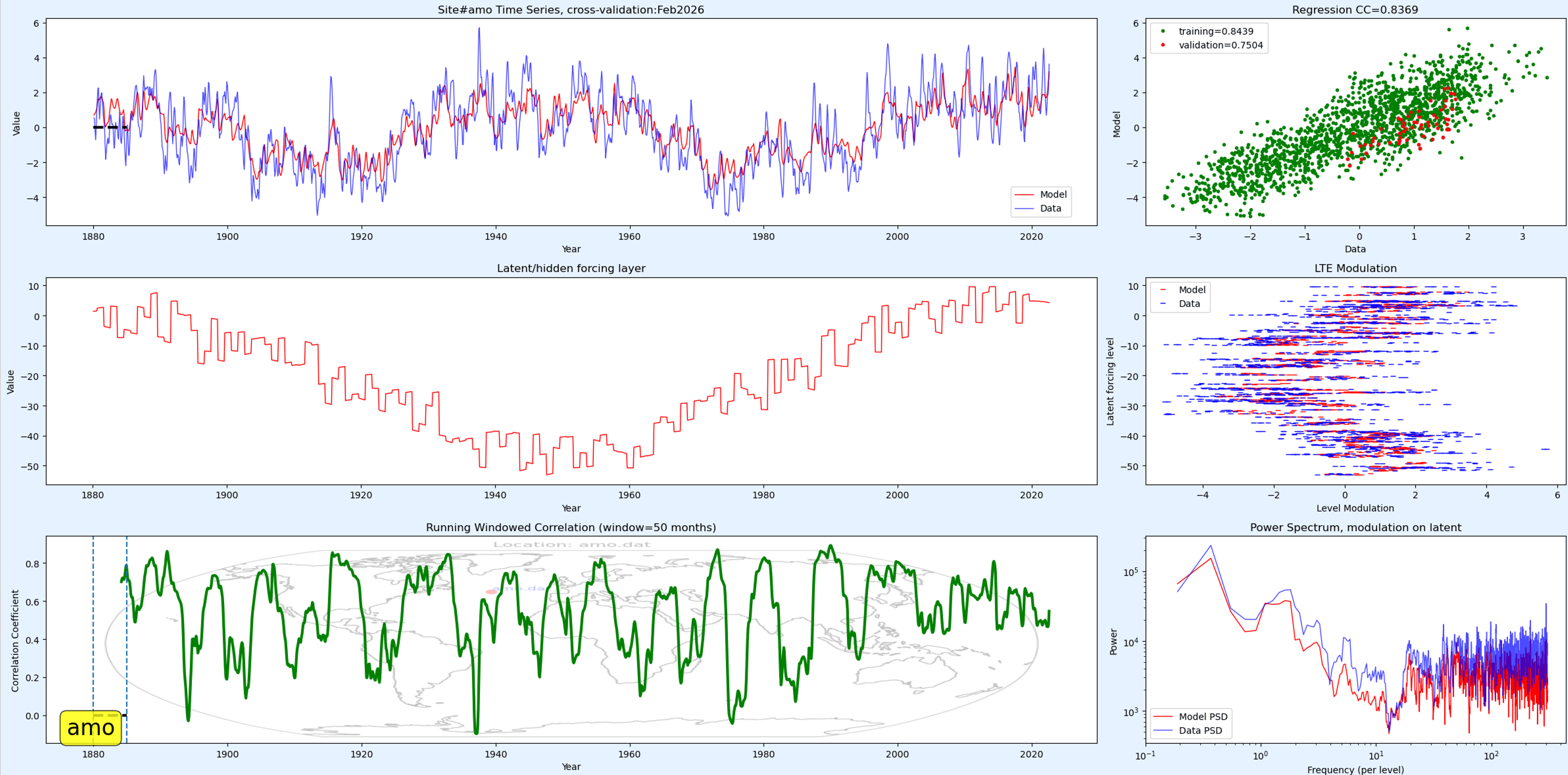
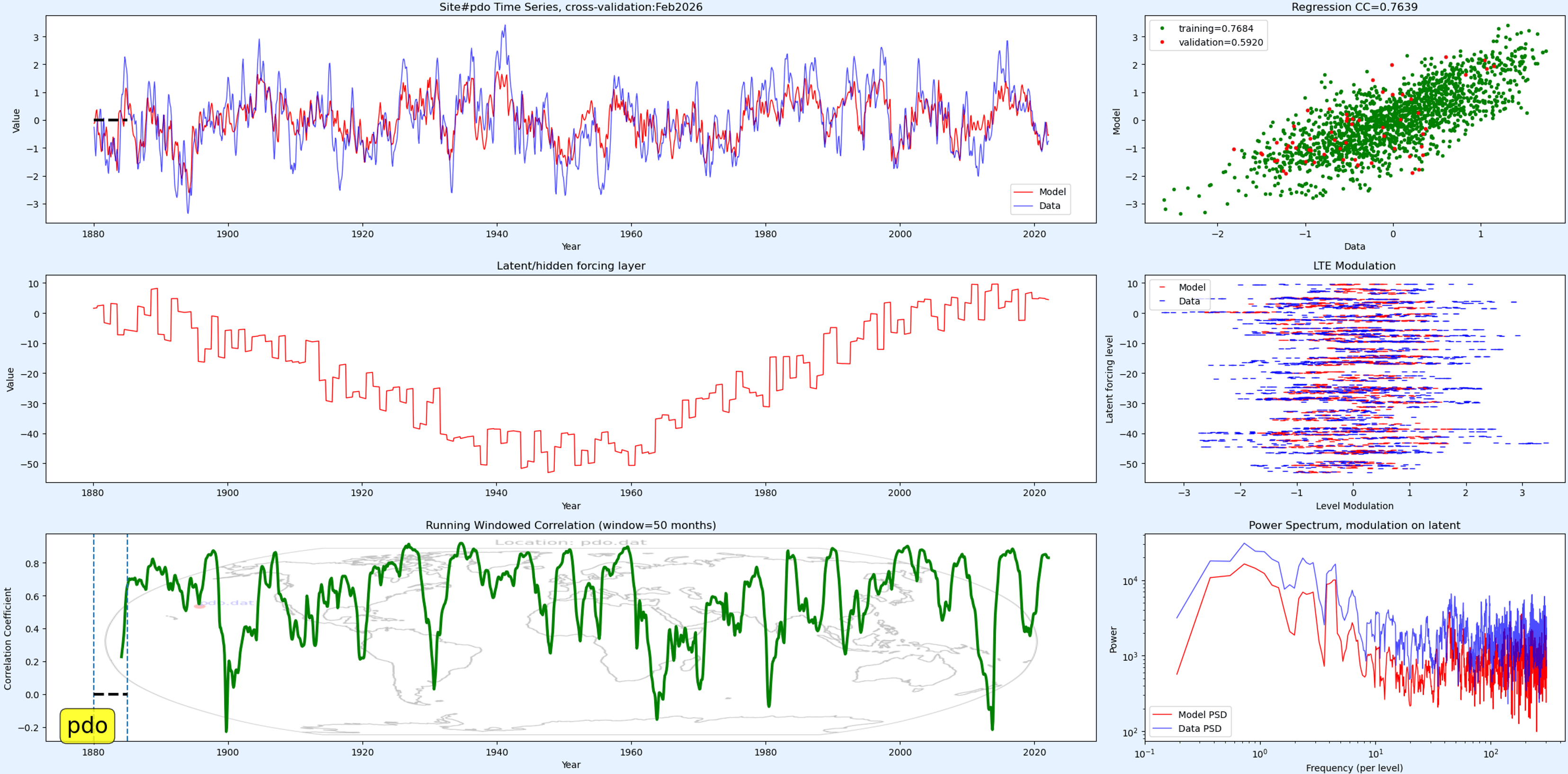
An algorithm that simultaneously optimizes the model fit to two disparate climate indices while keeping the hidden latent manifold constant. The two indices chosen, AMO and PDO, occur in separated ocean basins and show longer term variations, so that a multi-scale fit is necessary. The hidden latent manifold uses as a starting point the calibrated tidal factors needed to match the Earth’s LOD variations — the same torques that presumably cause the ocean’s thermocline to slosh. Only a slight perturbation to the tidal factors — amounting to a 0.996 correlation coefficient (instead of 1.0) to the calibrated LOD was needed to tweak the manifold during the fitting process.
AMO
PDO
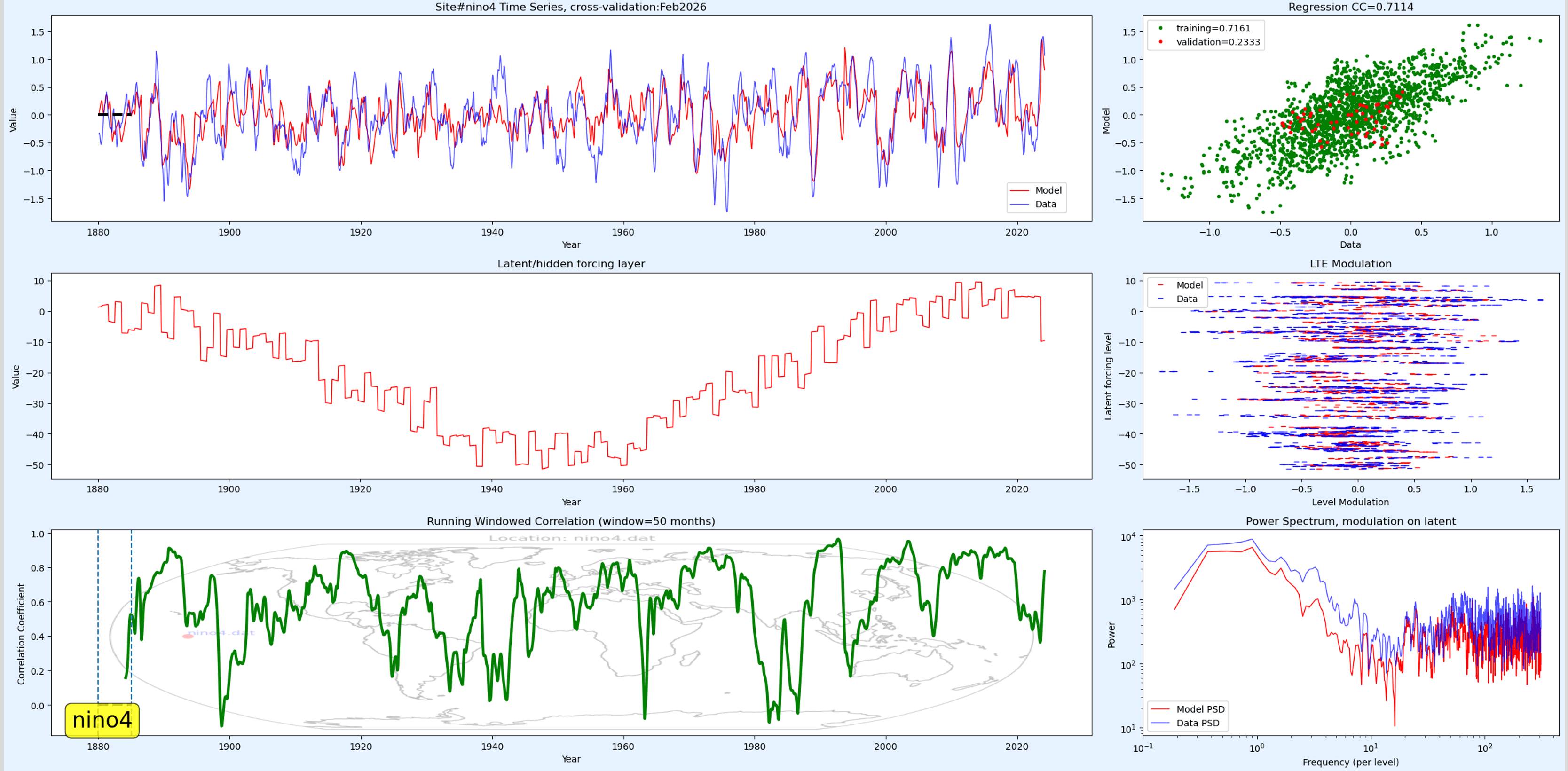
Can then use PDO as a seed to model NINO4 and IOD-East
NINO4
IOD-East
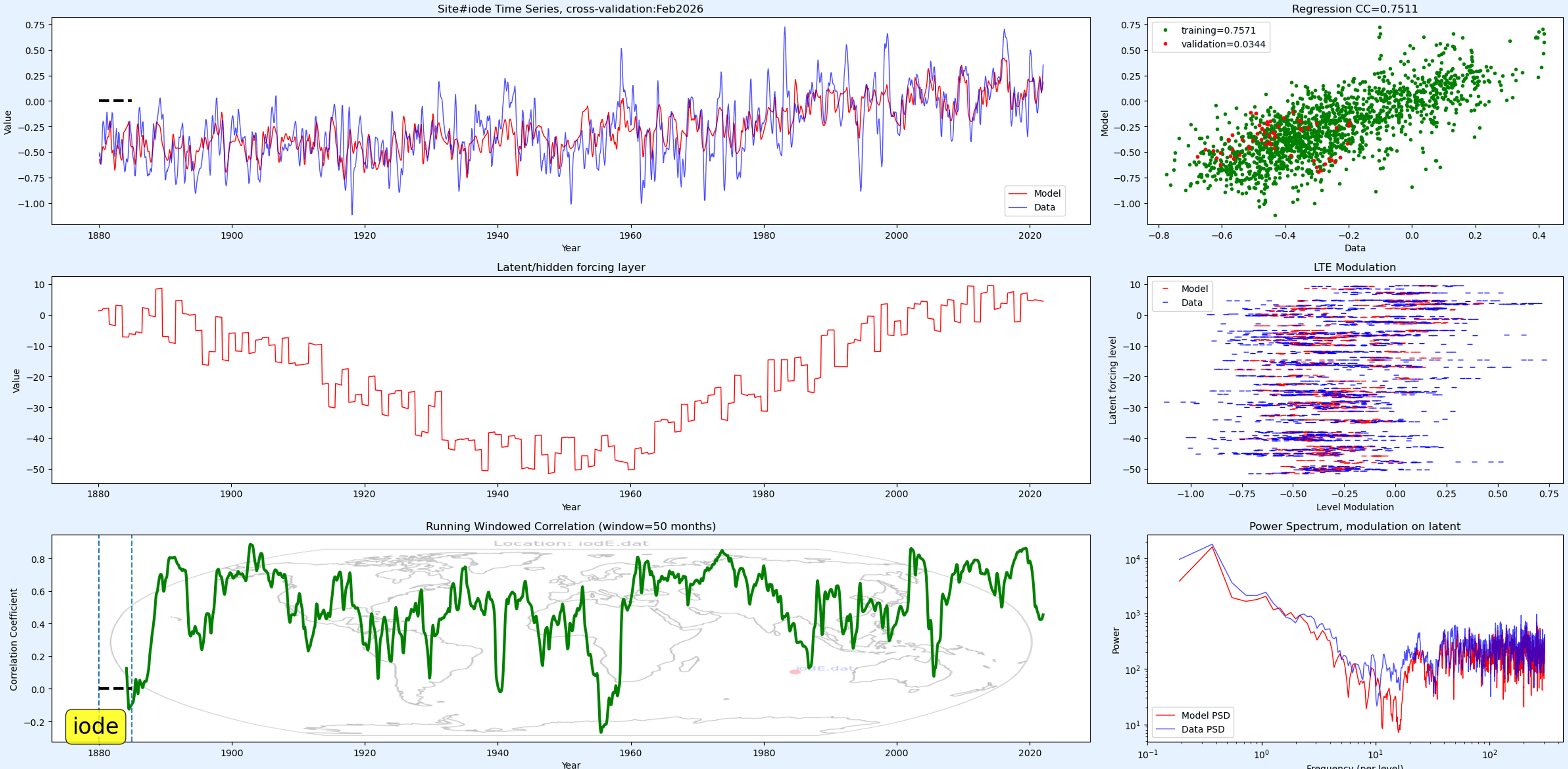
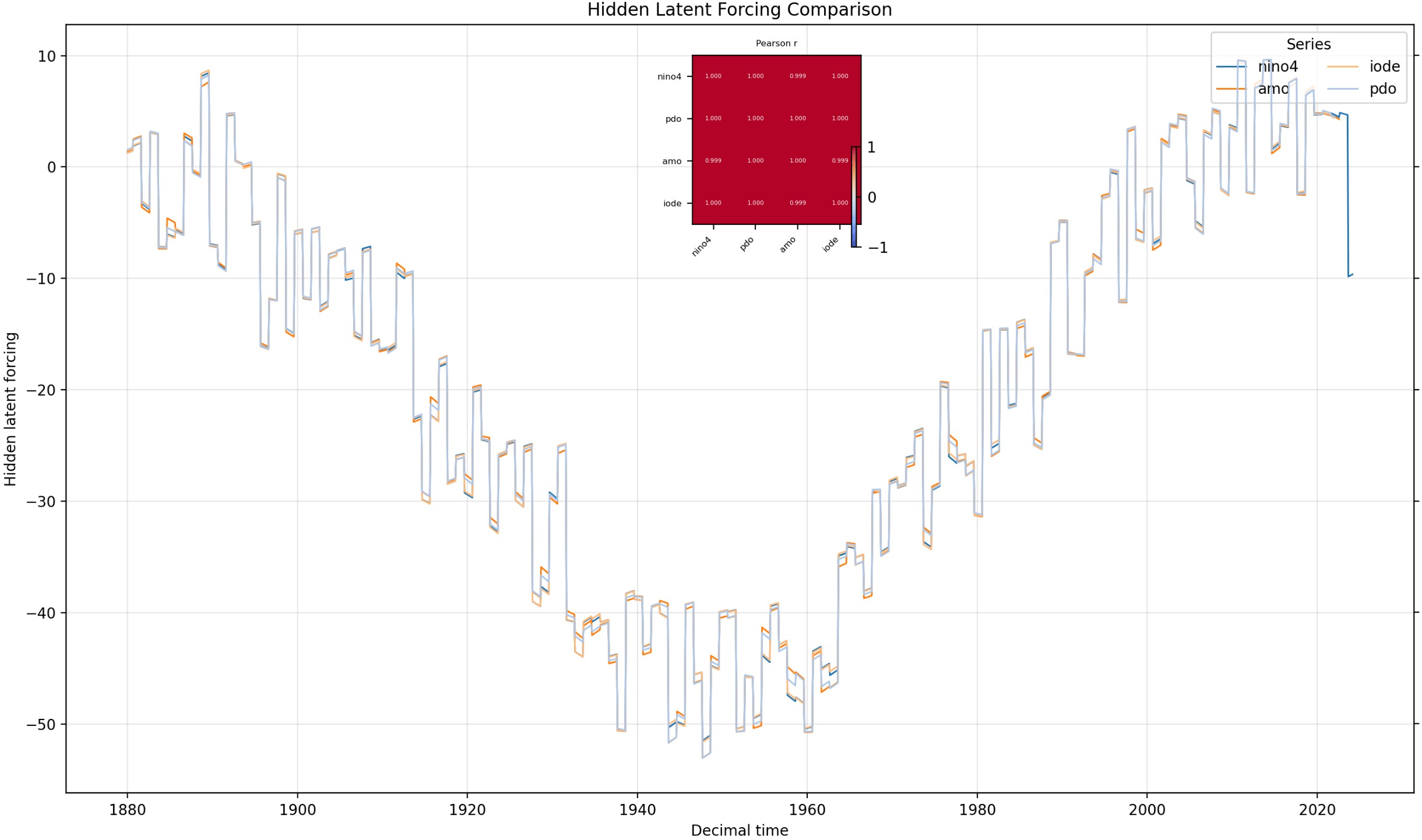
The manifolds are all aligned (below) with slight jogs that were caused by letting the fitting routine to proceed beyond the locked manifold stage.
Have not included NAO in this set of comparisons yet since NAO has an interesting relationship to AMO. If the value of AMO from 12 months back is fed back into the current AMO with a negative sign (a delay differential), and then the correlation coefficient is computed, that value is significant, especially on more recent values.

The plot below is an expedited fit that does a delay differential on the AMO model to emulate the NAO time series. Note that the fit degrades in the years 1890-1900 and 1915-1920, the same years that the above pot shows anti-correlations.
NAO

Also averaged Baltic MSL time-series. Has a dominant LTE mode, higher in winding frequency than the other indices.
Baltic MSL

It is so strong that other LTE windings do not contribute much to the variation in extremes.